
What is Cable Fault Locator in Bangladesh?
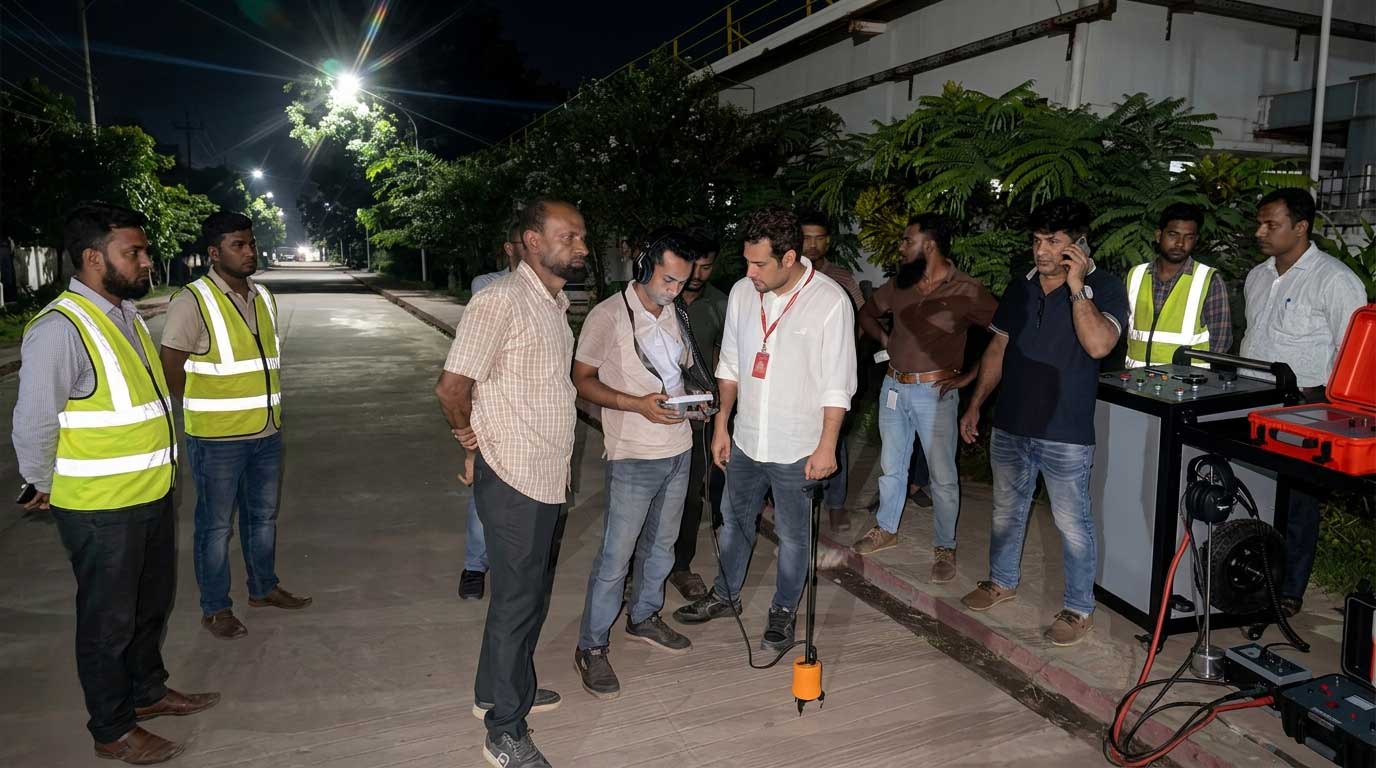
A cable fault locator Bangladesh is a set of instruments used to find the position of a fault in a power cable. The word “set” matters, because no single device does everything. A complete cable fault location system normally combines a high-voltage source, a pre-location instrument and a pinpointing unit.
The high-voltage source, often called a Hi Pot or surge generator, applies a controlled voltage to the cable. The pre-location instrument, usually based on time domain reflectometry, estimates how far along the cable the fault lies. The pinpointing unit, which uses sound and electromagnetic signals, finds the exact spot on the ground. A cable route tracer is used alongside these to follow the path of buried cable when the drawings are missing or out of date.
People search for this equipment under several names, including underground cable fault locator, HT cable fault locator, cable fault detection equipment and cable fault testing machine. They all refer to the same family of tools. The equipment is used by two groups: technicians who offer fault location as a service, and organizations that buy the machine for their own maintenance team.
Common Types of Electrical Cable Faults in Bangladesh
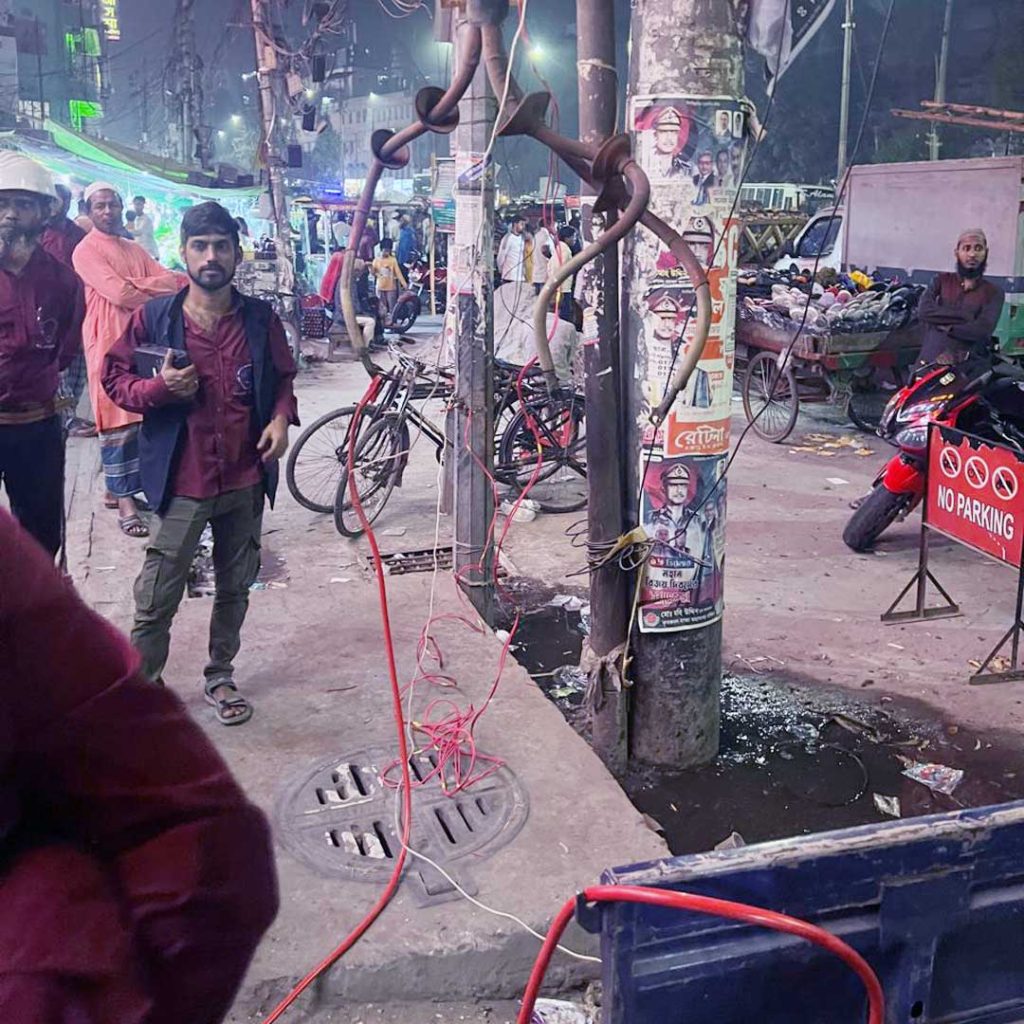
The method that works depends on the type of fault, so identifying it comes first. A basic insulation resistance test and a continuity check usually tell you which of the following you are dealing with.
Short Circuit Fault
A short circuit occurs when two conductors, or two phases, touch or the insulation between them breaks down completely. The resistance at the fault is very low, and the cable usually trips its protection at once. Short circuits are among the easiest faults to locate because they reflect a clear signal.
Open Circuit Fault
In an open circuit, one or more conductors are broken. Current cannot flow through the cable even though the insulation may be intact. Causes include mechanical damage from excavation, a pulled-out joint or a failed termination. An open circuit is seen as a very high impedance at the break.
Earth Fault (Ground Fault)
An earth fault is a leakage between a conductor and the earth, the sheath or the armour. It is the most common fault in underground cables. Moisture entering the insulation, a damaged outer sheath or a failed joint are typical reasons. How an earth fault is located depends on its resistance, which can range from a few ohms to several meg ohms.
High Resistance Fault
A high resistance fault has a leakage path with resistance too high to be seen directly by a low-voltage instrument. The cable may hold normal voltage for some time and then fail under load or when it is wet. These faults need a high-voltage method because a simple TDR trace will not show them clearly.
Intermittent Cable Fault
An intermittent fault appears and disappears. It may only occur when the cable is loaded, warm or wet, or when a surge hits it. Because the fault is not present all the time, it is the hardest to catch. A high-voltage test that breaks down the weak spot while the instruments are watching is usually the way to find it.
How Does a Cable Fault Locator Work in Bangladesh?
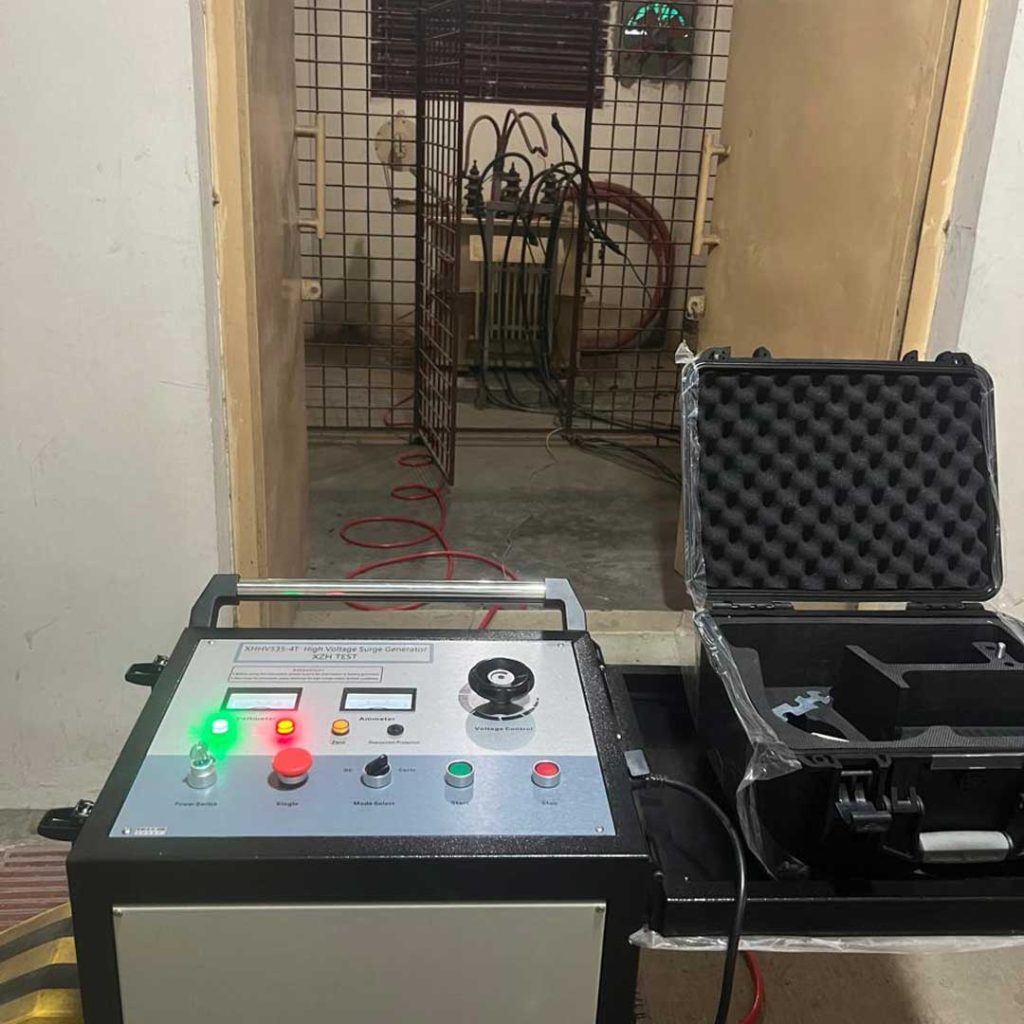
The working principle of a cable fault locator is to send a signal into the cable and study what comes back, or to apply a voltage that makes the fault reveal itself. A fault locator works in two stages. First, pre-location estimates the distance from the test end. Second, pinpointing identifies the exact position above ground. Several methods are used for pre-location, and the right one depends on the fault.
Time Domain Reflectometry (TDR)
TDR sends a short low-voltage pulse into the cable and records the reflection. A pulse travels along the cable and bounces back wherever the impedance changes, such as at a short, an open circuit, a joint or the cable end. The instrument measures the time between the outgoing pulse and the reflection and converts it to distance using the velocity of propagation, which depends on the cable insulation. TDR is excellent for shorts, opens and low-resistance faults. It cannot reliably show a high-resistance fault on its own.
Arc Reflection Method
The arc reflection method, often called ARM, solves the high-resistance problem. A high-voltage pulse from the surge generator makes the fault break down and form a short-lived arc. During that arc, the fault behaves like a low-resistance short, and a TDR trace taken at that moment shows its position clearly. It is widely used for faults that a plain TDR cannot see and is safer for the cable than repeated heavy surges.
Surge Wave Method (Thumping)
In the surge wave method, also called thumping, a charged capacitor is discharged into the cable. The high-voltage surge breaks down the fault, and the resulting transient is recorded to estimate distance. The same surge produces a loud thump and a magnetic pulse at the fault location, which is why surge wave equipment is also used in pinpointing. It works for high-resistance and flashover faults, including intermittent ones.
Murray Loop and Varley Loop Methods
The Murray loop and Varley loop are older bridge methods based on the Wheatstone bridge principle. They compare resistances along the faulty cable and a healthy cable of the same size, and the fault distance is worked out from the bridge balance. They need a good return conductor and are most useful for low-resistance earth faults. Modern instruments have largely replaced them in daily work, but they remain a good cross-check where a bridge is available.
Acoustic and Electromagnetic Fault Pinpointing
Once pre-location gives an approximate distance, pinpointing finds the exact location. A surge is sent into the cable at regular intervals. At the fault, the discharge produces a sound that travels through the soil and an electromagnetic pulse. A ground microphone with headphones, together with a receiver that compares the two signals, helps the operator find the point where the sound is strongest. This is the stage that tells the crew exactly where to dig.
Underground Cable Fault Testing & Diagnostics Process in Bangladesh
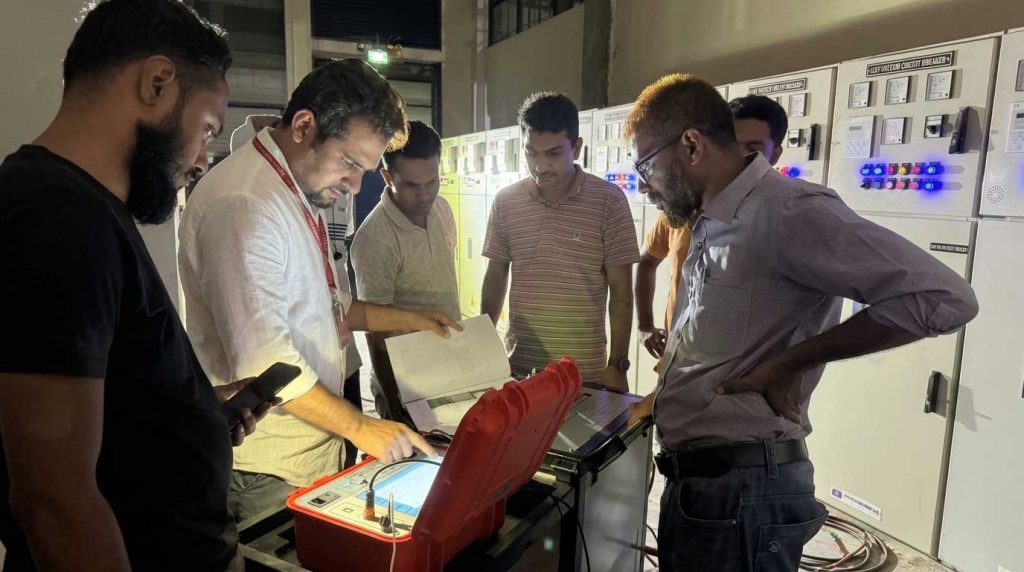
A professional underground cable fault testing and diagnostics job follows a clear sequence. Skipping steps leads to wasted digging.
- Collect information. Cable type, voltage, length, number of joints, route drawing, and the history of the fault such as tripping and earlier repairs.
- Isolate and make safe. Disconnect the cable from supply, discharge it, and apply earthing at both ends under a permit-to-work system.
- Check the insulation. An insulation resistance test between each core and earth, and between cores, shows the fault type.
- Classify the fault. Decide whether it is a short, open, earth fault, high-resistance or intermittent fault.
- Pre-locate. Use TDR for low-resistance faults, or arc reflection and surge wave methods for high-resistance ones, to get the distance.
- Trace the route. Follow the cable path on the surface so the distance can be marked on the ground.
- Pinpoint. Apply surge pulses and use the acoustic and electromagnetic receiver to find the exact point.
- Confirm and mark. Verify the location and mark it for excavation.
- Repair and retest. After the repair, test again with insulation resistance and Hi Pot or VLF to confirm the cable can be re-energized.
- Report. Provide a test report with readings, fault location and recommendations.
Applications of Cable Fault Locator Equipment in Bangladesh
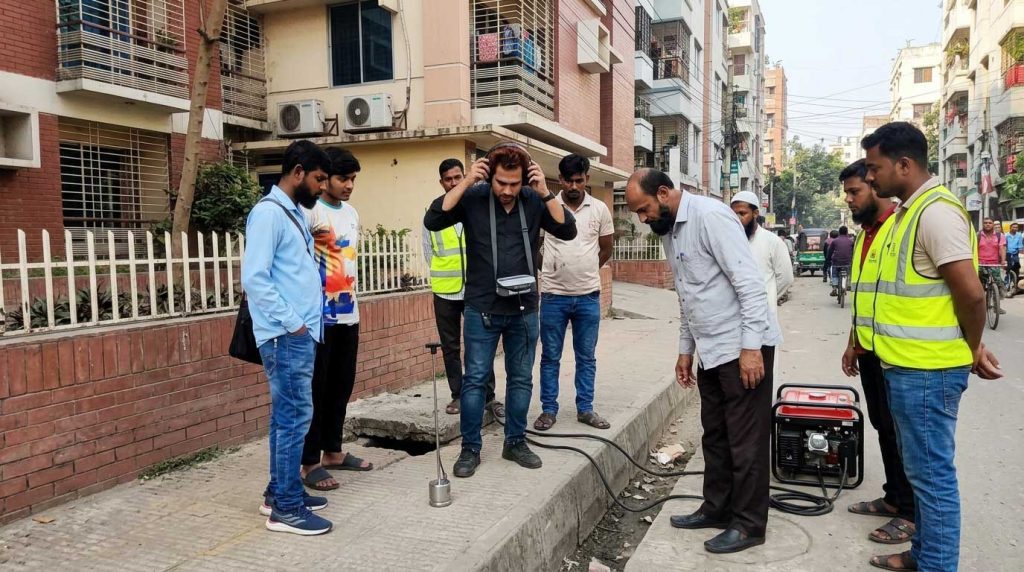
Cable fault detection equipment is used wherever buried or concealed power cable is installed:
- Electricity distribution utilities and substations.
- Industrial plants, including garment factories, steel mills, cement and textile units.
- Power plants and renewable energy installations.
- High-rise buildings and commercial complexes.
- Residential townships and housing projects.
- Airports, ports and railways.
- Telecom and infrastructure sites with underground power feeders.
- Contractors who install and maintain HT cable.
Why Are Cable Testing & Diagnostics Important in Bangladesh?
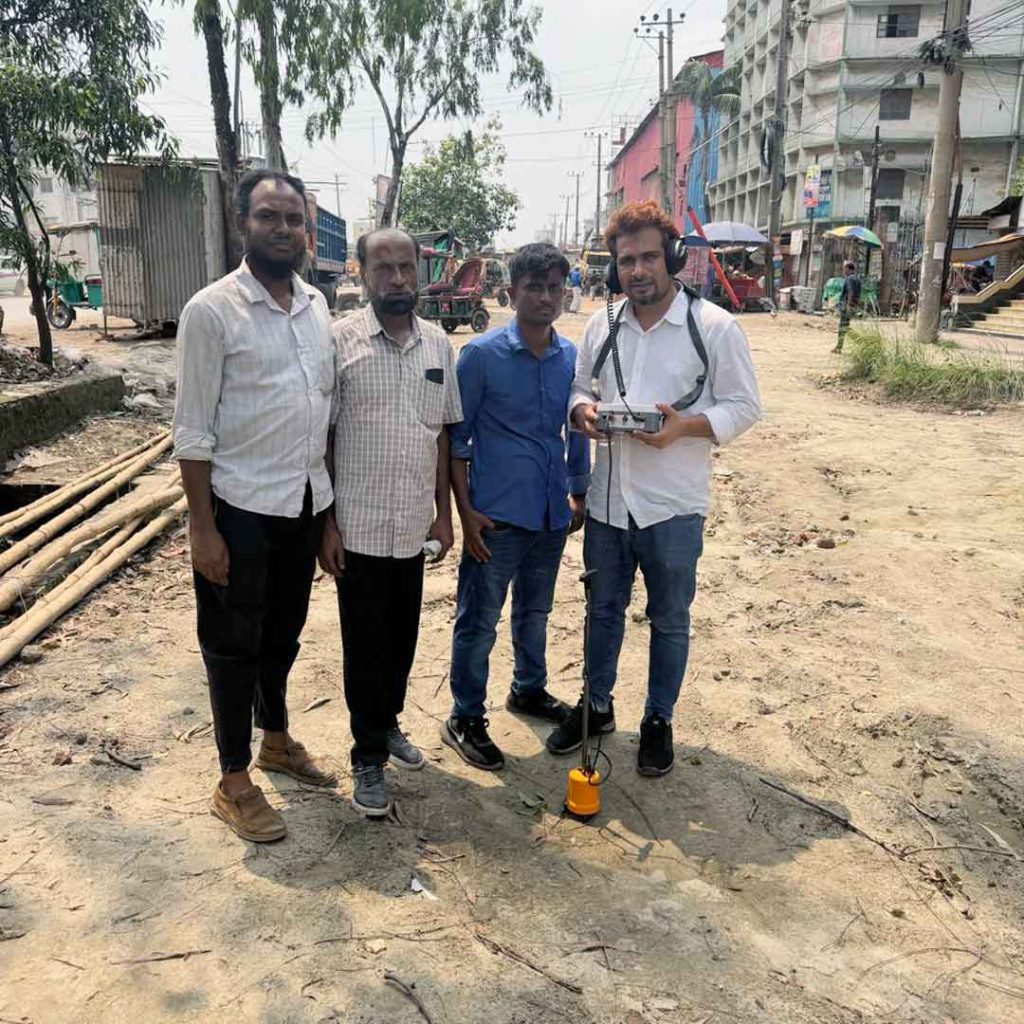
A cable is one of the few parts of a power system that is hidden and cannot be inspected by eye. Testing is the only way to know its condition. Regular cable testing and diagnostics bring practical benefits:
- Shorter outages. Exact fault location means faster repair and faster restoration of supply.
- Less excavation. Digging only where needed saves money and avoids damage to roads and other utilities.
- Safer operation. Weak insulation found early prevents cable burn-out and fire.
- Planned maintenance. Diagnostics show which cables are deteriorating, so replacement can be planned rather than forced.
- Quality assurance. New cable and joints are checked before energizing, so installation errors are found early.
- Lower long-term cost. Preventing failures costs less than emergency repair and lost production.
Frequently Asked Questions (FAQs)
What is a cable fault locator?
A cable fault locator is a set of instruments that finds the position of a fault in a power cable. It usually combines a TDR for distance estimation, a high-voltage surge generator for breaking down faults, and an acoustic pin pointer that finds the exact spot on the ground.
How do you locate a cable fault?
First isolate and test the cable to identify the fault type. Then pre-locate it with TDR, arc reflection or surge wave methods to get the approximate distance. Finally, trace the cable route and use an acoustic and electromagnetic pin pointer to find the exact point for excavation.
How do you find a fault in an electrical cable?
Start with insulation resistance and continuity tests to see if the fault is a short, open or earth fault. Then use a cable fault locator to measure the distance and pinpoint the location. Visual inspection alone rarely works for buried cable, so instrument-based location is the practical approach.
What tool locates cable faults?
No single tool does the whole job. A TDR gives the distance to the fault, a surge generator breaks down high-resistance faults, a cable route tracer follows the buried path, and an acoustic pin pointer finds the exact location. Together they form a complete cable fault location system.
How do we test if a cable is faulty?
Measure insulation resistance between each core and earth and between cores, and check continuity of every conductor. For HT cables, a Hi Pot or VLF test checks whether the cable withstands its rated voltage. Low readings, an open conductor or a breakdown during testing indicates a faulty cable.
What is the price of a cable fault locator in Bangladesh?
The price depends on the system type, voltage rating, brand, accessories and training included. A simple TDR costs much less than a full system with surge generator and pin pointer. Contact us with your cable details and we will give a written quotation for equipment or service.
How does a TDR cable fault locator work?
A TDR sends a low-voltage pulse into the cable and records reflections. When the pulse meets a change in impedance, such as a short, open circuit or joint, part of it reflects back. The instrument measures the travel time and, using the propagation velocity of the cable, calculates the distance to the fault.
How do you detect underground cable faults?
Isolate the cable, classify the fault, then pre-locate it using TDR or high-voltage methods. Trace the buried route and pinpoint the fault using surge pulses with an acoustic and electromagnetic receiver. The exact location is marked for digging, repaired and retested before the cable returns to service.
Can a cable fault locator detect high-resistance faults?
Yes, but not with a basic TDR alone. High-resistance faults need a high-voltage method such as arc reflection or surge wave, where a surge makes the fault break down momentarily so that its position can be recorded. This is why a surge generator is part of a complete system.
What equipment is used for HT cable fault detection?
HT cable fault detection typically uses an insulation tester, Hi Pot or VLF test set, TDR instrument, high-voltage surge generator, arc reflection coupler, cable route tracer and an acoustic pin pointer. The exact combination depends on cable voltage, fault type and site conditions.
What is the difference between cable fault pre-location and pinpointing?
Pre-location estimates the distance from the test end to the fault along the cable, using methods such as TDR, arc reflection or surge wave. Pinpointing then finds the exact position on the ground, using acoustic and electromagnetic signals, so that excavation is limited to a small area.
Where can I buy cable testing and diagnostics equipment in Bangladesh?
Buy from a supplier that offers demonstration, training, accessories and after-sales support. Capital Power Engineering (BD) supplies cable fault detection and testing equipment and also provides on-site service. Call 01713-930394 or email capitalpowerbd@gmail.com for details and a quotation.