Onsite Transformer Oil Centrifuging Service
A transformer can look perfectly healthy from the outside and still be heading for trouble inside. The oil is the reason. It insulates the windings, it carries heat to the radiators, and it slowly collects water, fine carbon, fibres and oxidation products over the years. When enough of that builds up, the oil can no longer do its two jobs, and the first sign is often a trip, a failed test or, worse, an internal flashover.
Transformer oil centrifuging is one of the practical ways to deal with that problem without draining the tank and buying new oil. This article is written from an electrical engineer’s point of view for plant managers, maintenance engineers, contractors and utility staff in Bangladesh. It explains what centrifuging is, when it is needed, how the process is done, how it differs from filtration and purification, what affects the cost in Dhaka and across the country, and how Capital Power Engineering (BD) carries out the service at your site.
How Capital Power Engineering (BD) Provides Transformer Oil Centrifuging Service?
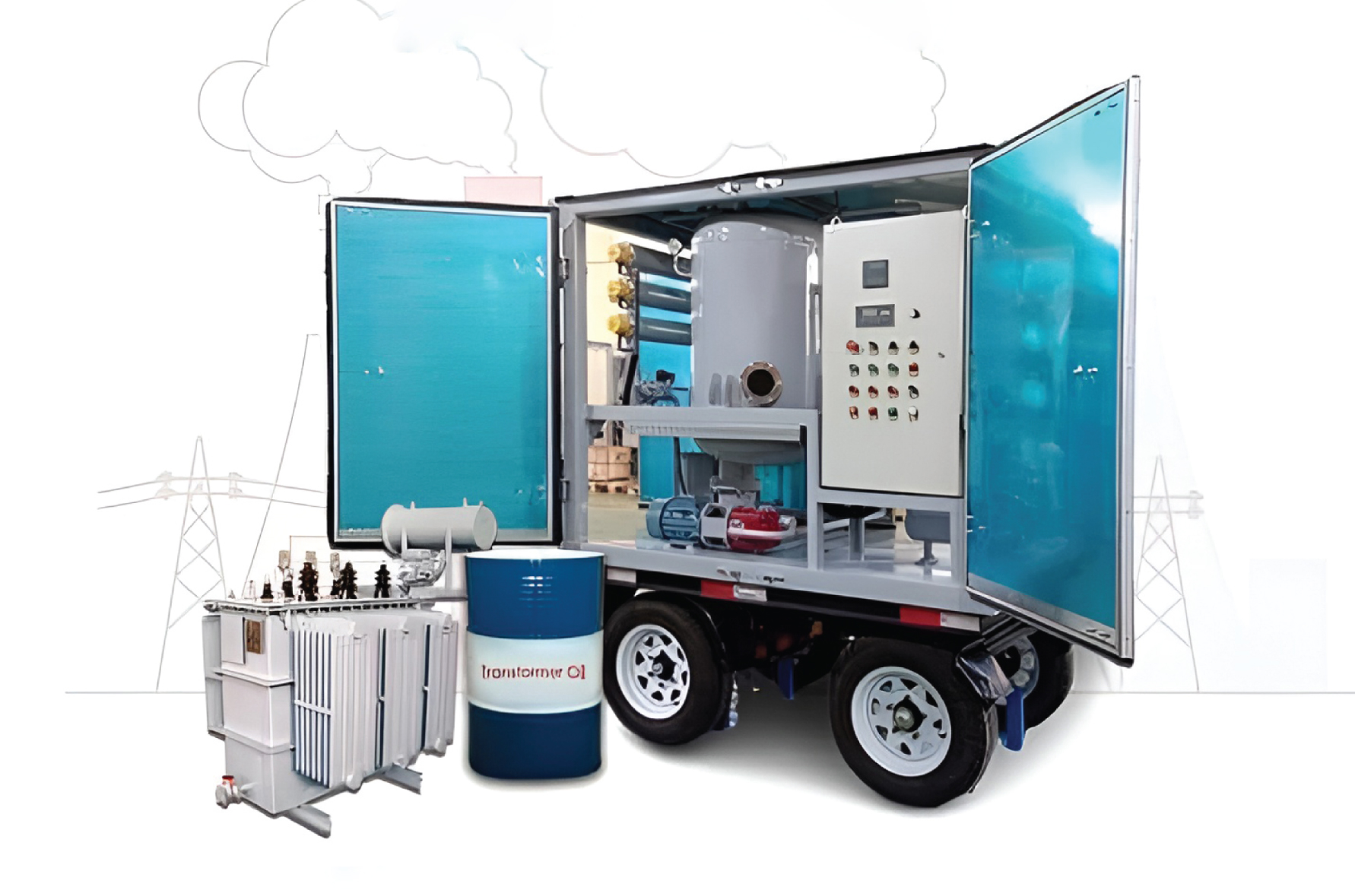
Capital Power Engineering (BD) provides transformer oil centrifuging, filtration and purification service at your site in Dhaka and across Bangladesh. Our team brings the treatment plant to the transformer, so there is no need to move heavy equipment or ship oil to a workshop.
Our process follows the same logic described above:
- Enquiry and assessment: You tell us the transformer rating, oil volume and the problem. If you have a test report, we review it.
- Site visit and sampling: Our engineer inspects the transformer and takes an oil sample for testing.
- Based on the result: We advise whether centrifuging, filtration, vacuum dehydration or a combination is needed.
- Safe setup: The transformer is isolated and earthed under your permit system, and our plant is connected with clean hoses.
- Oil is heated within limits: Filtered and processed through the plant, with circulation as many times as required.
- Testing and report. We test again and share the results with you.
- The transformer is refilled and checked, and you receive a summary and any recommendation for follow-up.
As we also supply Savita transformer oil and transformer accessories, we can top up or replace oil, change silica gel, or supply gaskets in the same visit if the inspection shows they are needed.
Professional Transformer Oil Centrifuging Service in Bangladesh
A professional transformer oil centrifuging service in Bangladesh should offer more than a machine and an operator. Look for these qualities:
- Testing before and after. Treatment without measurement cannot be verified.
- Trained, authorised technicians who follow isolation and earthing procedures.
- Clean equipment and hoses. Dirty hoses can add contamination to the oil.
- Onsite capability. Mobile plants that come to your substation or factory avoid shutting down for long transport.
- Honest advice. The service should tell you when oil is beyond purification.
- A written report with readings, treatment details and recommendations.
These points separate a reliable onsite transformer oil filtration service in Bangladesh from a basic pumping job
Industrial transformer oil centrifuging services
Any organisation that owns oil-filled transformers benefits from regular treatment:
1. Garment and textile factories, where continuous production makes unplanned outages costly.
2. Steel, cement and heavy industry, where dust and heavy loading stress transformers.
3. Power plants and substations operated by utilities and private producers.
4. Distribution utilities and rural electric networks with large transformer populations.
5. High-rise buildings, hospitals and commercial complexes with their own substations.
6. Renewable energy installations, such as solar plants with step-up transformers.
7. Ports, airports and infrastructure projects that depend on reliable power.
8. Transformer repair workshops and contractors who need clean oil after rewinding.
These buyers often search for transformer oil centrifuging service for substations, industrial transformer oil filtration service in Bangladesh, or a transformer oil centrifuge service for power transformers. The need is the same: clean, dry oil with test results to prove it.
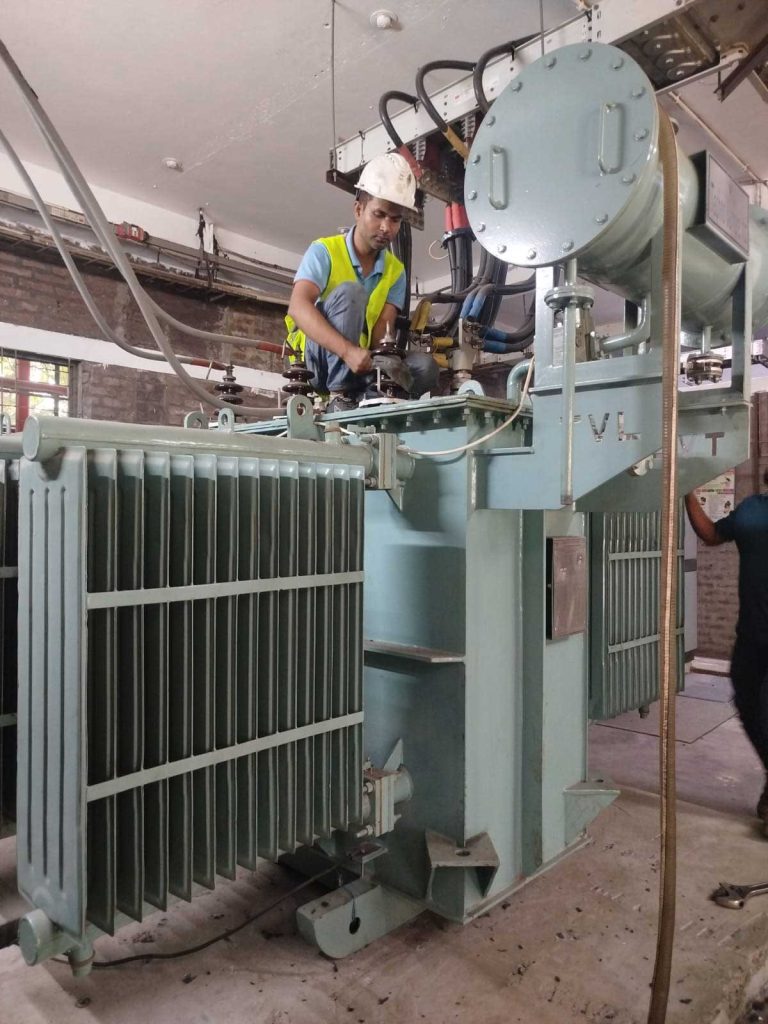
Transformer Oil Centrifuging and Filtration Procedure
A well-run transformer oil filtration procedure is controlled by testing at the start and at the end. The outline below is the sequence a competent team follows. Always follow the manufacturer’s manual and your own site permit rules.
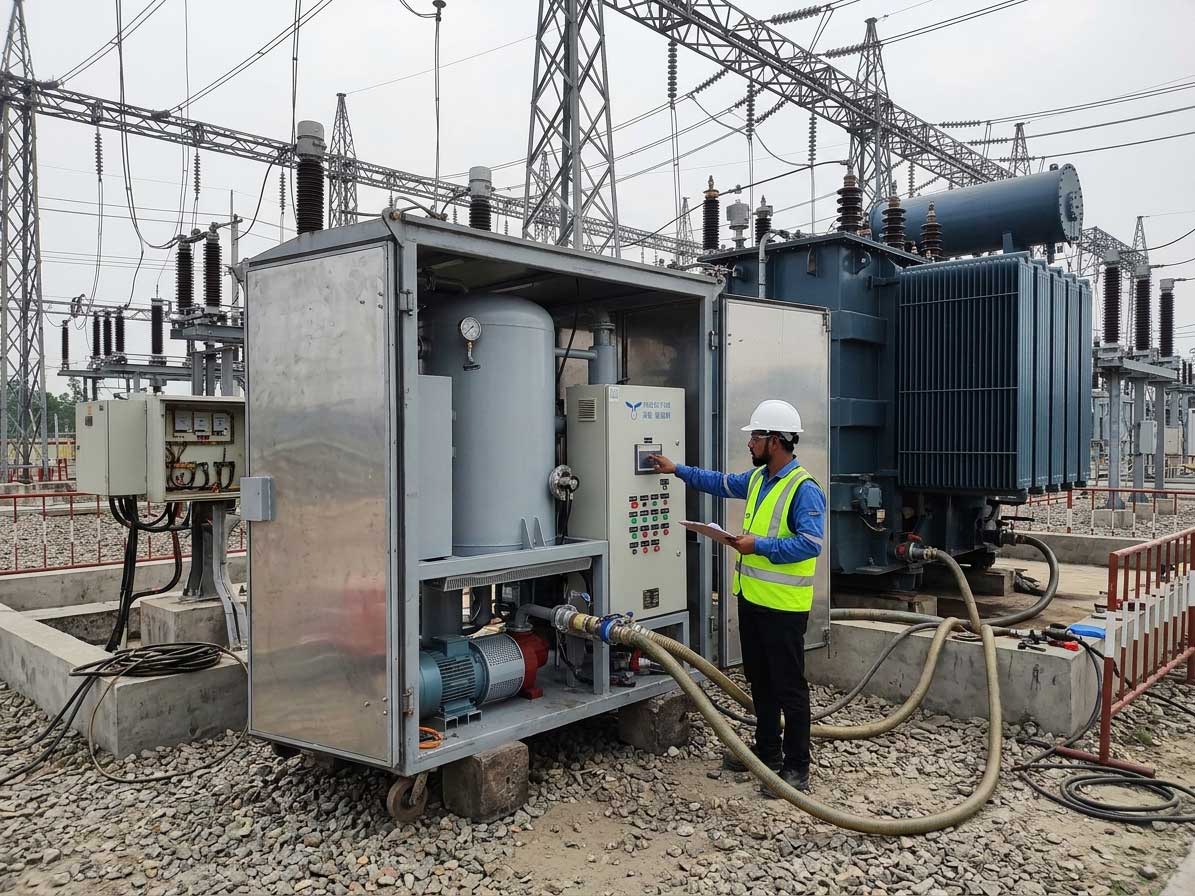
- Initial oil testing. Take a sample and test BDV, moisture content, acidity, dielectric dissipation factor and appearance. This tells you what needs to be fixed and sets the target.
- Safety isolation. Isolate the transformer electrically, follow your lock-out/tag-out procedure and confirm proper earthing before any hose is connected.
- Machine setup. Inspect the machine, hoses, valves and filters, check earthing and electrical supply, and prepare a clean tank for the treated oil.
- Oil suction. The inlet pump draws oil from the transformer through the hoses into the machine.
- Oil is warmed to the temperature permitted by the machine and the oil manufacturer. Excess heat damages oil, so the limit must not be exceeded.
- Oil passes through filters that stop dust, carbon and fine suspended particles.
- Centrifugal separation. The bowl separates free water and heavy particles from the oil.
- Vacuum dehydration (where fitted). Dissolved water and gases are drawn out under vacuum and heat.
- Clean oil collection and circulation. Treated oil is collected in a clean tank or returned to the transformer. Where needed, the oil is circulated several times until it meets the target. The number of passes depends on the starting condition, oil volume, machine capacity and the BDV required.
- Final testing and refill. A new sample is tested. Only when the results meet the required values is the oil refilled or the circulation closed, followed by checks of oil level, leaks, valves and protection devices.
Clean-looking oil is not proof of good oil. The decision to finish is made on test results, not on colour.
Transformer Oil Centrifuging vs. Oil Filtration
People often use these terms as if they mean the same thing. They do not.
- Centrifuging separates by density. It is effective for free water, sludge and heavier particles. Its main strength is bulk removal.
- Transformer oil filtration passes the oil through filter elements that trap particles by size. It removes dust, carbon and fibres, and it polishes the oil. Ordinary filtration does not remove dissolved water by itself.
- Vacuum filtration adds heat and vacuum, and this removes dissolved moisture and gases, which neither a centrifuge nor a plain filter can do.
In short, centrifuging handles bulk water and heavy contamination, filtration handles fine solids, and vacuum dehydration handles dissolved moisture and gas. A good service uses the right combination for the oil’s condition. That is why many industrial operators ask for transformer oil centrifuging with servicing, where the oil is tested, treated and tested again as one job.
Transformer Oil Centrifuging vs. Oil Purification
Oil purification is the broader term. It means any set of processes that brings oil back to the required quality, so it can include centrifuging, filtration, vacuum dehydration and degassing. Centrifuging is one tool inside purification.
There is also a step beyond purification. Oil purification removes water, particles and gas, but it does not reverse chemical ageing. If the oil is highly oxidised, with high acidity, low interfacial tension and a dark colour, purification will not restore it. In that case the oil needs reclamation, which uses adsorbent material to remove the acids and polar compounds, or replacement. A good engineer tests first and advises honestly which route makes sense, rather than selling centrifuging for every problem.
Transformer Oil Centrifuging Machine and Equipment
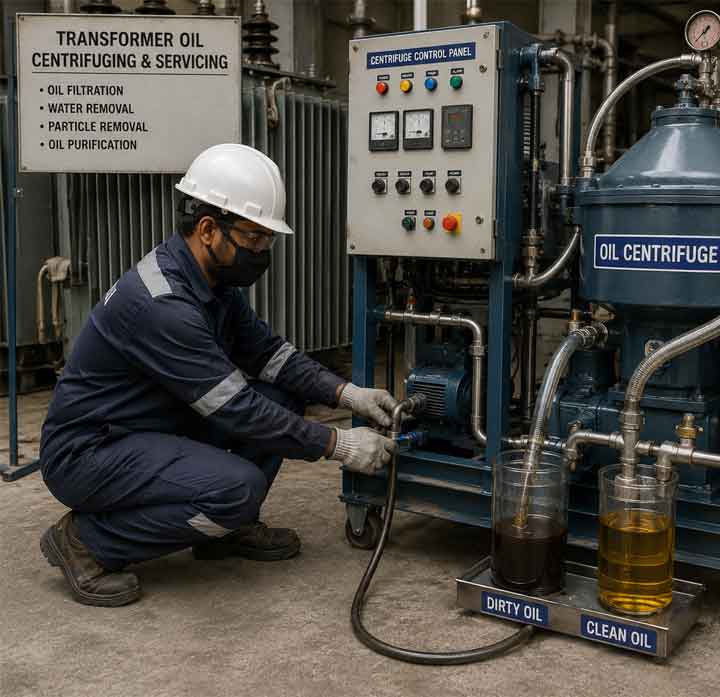
A complete transformer oil centrifuging machine setup for field work usually includes:
- Centrifuge unit with a high-speed bowl, water and oil outlets, and a sludge collection system.
- Heater with temperature control, to keep oil within safe limits.
- Filter stages from coarse strainers to fine cartridge filters.
- Vacuum chamber and vacuum pump for dissolved water and gas removal, where the plant has them.
- Oil pumps and flow control to manage the circulation rate.
- Hoses, valves and fittings that are clean, dry and oil-compatible.
- Clean storage tanks or drums for treated oil.
- Control panel with safety interlocks, alarms and emergency stop.
- Testing equipment such as a BDV test set and moisture measurement instrument, so that results can be checked at the site.
Machine capacity is stated in litres per hour. A larger capacity finishes faster, but the quality of the result depends on the oil’s condition and the number of passes, not only on flow rate.