If you want to buy a cable fault locator in Bangladesh, look for a supplier that understands the work, not only the sale. Ask whether they can demonstrate the equipment on a real cable, supply the manuals and test accessories, train your operators and support the equipment after delivery.
A genuine cable testing equipment supplier in Bangladesh will also be able to explain which method suits your cable and fault type. If the answer to every question is the same machine, be cautious. Ask for the datasheet, warranty terms and a clear list of what is included.
Capital Power Engineering (BD) supplies and operates cable fault detection and testing equipment, and it also provides the service on site. You can choose whichever suits your need: hire our team for a fault, or discuss equipment for your own maintenance staff.
HT Cable Fault Detection & Diagnostic Service in Bangladesh

 Cable Fault Locator in Bangladesh Services
(HT) Cable Fault Detection & Hi-Pot Testing
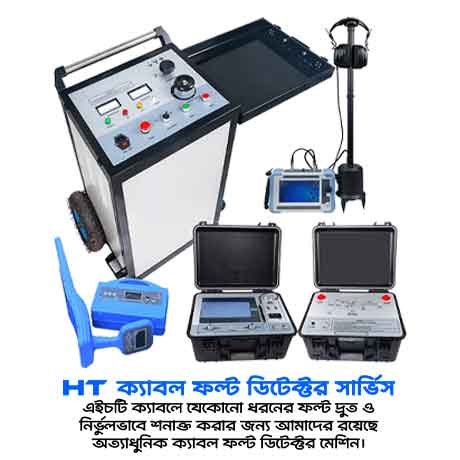

A single fault in an underground High-Tension (HT) cable can completely shut down your factory operations, causing massive production losses. Finding the exact location of a underground cable fault manually can take days.
CAPITAL POWER ENGINEERING (BD) offer advanced, high-precision HT Cable Fault Detection and Hi-Pot (High-Potential) Testing services to locate and diagnose cable issues within a few moments, minimizing downtime and protecting your electrical infrastructure.
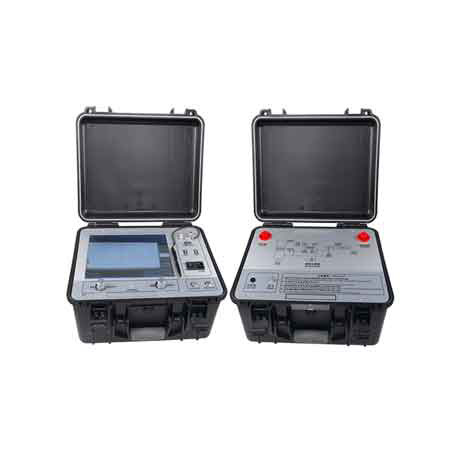

Our Advanced Technical Capabilities
We use state-of-the-art diagnostic equipment to pinpoint faults accurately without damaging healthy sections of your cable:
Hi-Pot Testing (High Potential Test): We apply controlled high voltage to your HT cables (11kV / 33kV) to check the integrity of the insulation. This instantly identifies weak spots, insulation breakdown, or moisture ingress before a catastrophic blowout occurs.
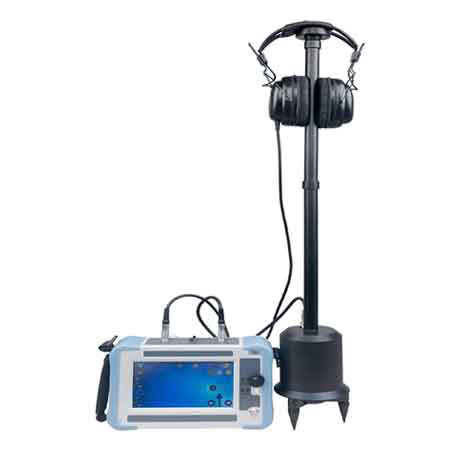

Rapid Fault Location: Using advanced surge generators (thumpers), time-domain reflectometers (TDR), and acoustic locators, we pinpoint the exact meter/location of short circuits, open circuits, and earth faults in a matter of minutes.
Cable Jointing & Termination: Once the fault is detected, our expert team can immediately cut, splice, and install high-quality heat-shrinkable HT cable joints to restore power swiftly.
 FAQs
Frequently Asked Questions
Where to Buy Cable Fault Locator in Bangladesh?
How to Choose the Right Cable Fault Locator?
Choosing the right equipment avoids buying more than you need or less than you require. Consider these points:
• Cable voltage class. An LT building network and an 11 kV or 33 kV feeder need different equipment.
• Fault types you expect. If high-resistance and intermittent faults are common, include a surge generator and arc reflection capability.
• Cable length. Make sure the TDR range covers your longest cable.
• Cable material. XLPE, PVC and paper-insulated cables have different propagation velocities, so the instrument must allow you to set it.
• Portability. A trolley-mounted system suits a service van, while a compact case suits an in-house team.
• Safety features. Look for proper earthing, interlocks, discharge function and clear emergency stop controls.
• Training and support. The best equipment is of little use if operators are not trained to interpret traces.
Spare parts and calibration. Check that local support is available.
Why Choose Capital Power Engineering (BD)?
Capital Power Engineering (BD) is based in Tongi, Gazipur, and works with customers in Dhaka and across the country. We combine equipment, trained technicians and practical field experience.
• Complete equipment. We use Hi Pot high-voltage equipment, TDR instruments, acoustic pin pointers and cable route tracers, so the whole job from pre-location to pinpointing is done by one team.
• Field-ready service. Our team works on roadsides, in substations and at factories, including at night when power needs to stay on during the day.
• Quick response. A phone call is enough to start. We discuss the fault, send a team and report results.
• Technical clarity. We explain readings and the reason for each step, and give a written report on request.
• Safety first. Isolation, earthing and discharge procedures are followed before testing begins.
• Single point of contact. We also supply transformers, transformer oil, accessories and electrical equipment, so related needs can be handled together.
How to Get a Cable Fault Locator Price and Quotation?
To get a cable fault locator quotation in Bangladesh, or to book a fault detection service, send us the following details:
• Cable voltage and type, such as 11 kV XLPE or LT PVC.
• Approximate cable length and route description.
• Fault history, for example tripping, earth fault or burn-out.
• Site location and when you need the work done.
• Whether you need service only or you plan to buy equipment.
Contact Capital Power Engineering (BD):
• Address: Plot# 3/2, Hazi Nowab Ali Road, Boro Dewora, Nishat Nagar, Tongi, Gazipur
• Phone: 01713-930394
• Email: capitalpowerbd@gmail.com
• Website: www.capitalpowerbd.com